
Historybusters on Facebook
Sunday, April 4, 2010

Monday, March 1, 2010
Another fun way to use Historybusters’ Presidential Concentration card deck…
In order to celebrate President’s Day this past month, I decided to put the images from our Presidential card deck up on our corkboard. I chose to post the cards that had logos on the back, and I had the kids help me figure out their order by using the mnemonic phrases included in the card deck. Here are two of them showing off their work…


 Let’s just say that the activity has proven very popular. Whenever a group of kids has put the cards in order, they bring them to me and we check them together by saying the mnemonic phrases out loud. Lately, when I do so, everyone in the room chants with me. I see them checking out the board and phrases when I am not looking. Yesterday, I think I checked those cards every ten minutes. It was such a pleasure hearing third and fourth graders quietly arguing about why Cleveland has two cards, and why Tyler came next, not that “guy with the beard.” They were causally using obscure presidential names—names that many adults I know wouldn’t recognize.
  I have slowly begun adding challenges to the game for the older kids. I talked earlier this week about the eight presidents who had died in office and why. (We even marked the four presidents who had been shot with "bullet holes," one of the kid's ideas, not mine) I have also begun challenging them to separate out individual cards and tell me how they died. Consequently, players have begun reading the back of the cards. I have also started to ask kids if they can point to the presidents who were alive during the Revolution, the Civil War, the Spanish American War, WWI, WWII, the Korean War etc. You get the idea. We have had a number of great discussions about each of those events because the kids begin to ask questions in order to answer my original question.
 How much will sink in and last? Who knows, but it is a delight to find them interested.
Click here to access the card deck I used.
Give it a try, and as always, Happy Historybusting…

We even had a small space left after Obama, so I cut some yellow construction paper to size and created a flip card. On the outside of the card is a giant question mark. Inside the card, I taped a small mirror, implying that the next president could be any one of my students. My younger kids just loved it, and kept calling out “It’s me. It’s me. I am the next president.” Here is one of my older students looking in the mirror…

Next, I wrote out the mnemonic phrases on construction paper and posted them near the bottom of the corkboard. I then tossed the second half of the cards on a small table and challenged any kid who came in to put the cards in order. Here we have the first young man to accept my challenge.
 Let’s just say that the activity has proven very popular. Whenever a group of kids has put the cards in order, they bring them to me and we check them together by saying the mnemonic phrases out loud. Lately, when I do so, everyone in the room chants with me. I see them checking out the board and phrases when I am not looking. Yesterday, I think I checked those cards every ten minutes. It was such a pleasure hearing third and fourth graders quietly arguing about why Cleveland has two cards, and why Tyler came next, not that “guy with the beard.” They were causally using obscure presidential names—names that many adults I know wouldn’t recognize.
  I have slowly begun adding challenges to the game for the older kids. I talked earlier this week about the eight presidents who had died in office and why. (We even marked the four presidents who had been shot with "bullet holes," one of the kid's ideas, not mine) I have also begun challenging them to separate out individual cards and tell me how they died. Consequently, players have begun reading the back of the cards. I have also started to ask kids if they can point to the presidents who were alive during the Revolution, the Civil War, the Spanish American War, WWI, WWII, the Korean War etc. You get the idea. We have had a number of great discussions about each of those events because the kids begin to ask questions in order to answer my original question.
 How much will sink in and last? Who knows, but it is a delight to find them interested.
Click here to access the card deck I used.
Give it a try, and as always, Happy Historybusting…
Tuesday, February 23, 2010
On this day in history....

The 28th Regiment of the 5th Marines took Mount Suribachi and raised the American Flag
while the battle for control of Japanese-held Iwo Jima raged on. The moment was captured in a Pulitzer Prize winning photo by AP photographer Joe Rosenthal.
Here are some links that honor this event:
My favorite:
Some other nice links:
A wonderful Historybusting movie...

Children of Huang Shi is a 2008 film based on the life of George Hogg, an independent journalist for the Associated Press during the Second Sino-Japanese War. I should warn you right now, the film is rate R. But then again, what movie that takes its viewers into the heart of Civil War China on the eve of World War II could not be rated R. The film's few scenes of the Japanese occupation and the Nanking Massacre were brutal and all too accurate. However, this film is about much more than Nanking. It is about a man who takes it upon himself to save over sixty orphaned boys from the terrors of that time by attempting a 700-mile march along the Silk Road.
As with all films, it is an abridged and altered version of his true story. The film has been criticized for ignoring the role of Rewi Alley, a Communist New Zealander celebrated in China's revolution. The film also turned real life New Zealander Kathleen Hall, who was associated with Alley, into an American without a past. Their romance adds to the story but is inaccurate. Several other inaccuracies occur within the film. Perhaps the most blatant inaccuracy occurs near the end of the film. At the risk of giving a bit too much away, let’s just say that the cut he received in the movie while fixing the truck didn’t happen. In truth, aftering bringing his boys to safety, Hogg stubbed his toe while playing basketball with them in July 1945. However, the events following that small injury were accurate. Overall, this film is destined to become one of our Historybusing favorites, and lucky, George Hogg left a first hand account of his life—an autobiography entitled I See a New China.
Click here for the film’s official website
Monday, February 22, 2010
Need to cite your sources???

The dreaded day comes to all serious students when they are asked to write a research paper complete with citations and bibliography. Here are some excellent links that should help your students through their dread...
Rules for citing sources:
The rules of citation vary depending upon your purpose, teachers, and discipline. The one rule that never changes is “Always Cite Your Sources.” Citing your sources adds validity to your reports and ensures that you do not plagiarize. Here are two excellent websites about how to cite your sources:
http://www.rpi.edu/web/writingcenter/wc_web/school/citations.htm
http://www.lib.berkeley.edu/instruct/guides/citations.html
Your teacher will most likely ask you to use MLA (Modern Language Association) for your citations; it is used in college level literature and the humanities papers. Here are some great websites to help you format both your footnotes and your bibliography.
- MLA Style Guide (pdf) - Examples of how to cite sources for reference lists. From American University.
- Bibme - Creates bibliographies, and one can then download the bibliography as an RTF file. Registration is free.
- Documenting Sources: MLA Style - MLA in-text citations, list of works cited, information notes, manuscript format, and a sample paper. From http://www.dianahacker.com/
- EasyBib - Fill in online form and site will generate standard bibliographic citations. Only MLA Style is free.
- Frequently Asked Questions about the MLA Style - Official MLA site.
- MLA Parenthetical Documentation - From St. Cloud State University.
- Son of Citation Machine - Fill in online form and site will generate standard bibliographic and in-text citations.
- MLA Citation Examples – Posted by Honolulu Community College Library
- MLA Citation Examples – Posted by Long Island University
- MLA Citation Guide from Ohio State University
- I particularly like what they have to say about citing electronic sources (i.e. the Internet)
Friday, January 29, 2010
A historybusters' tirade...

Kamehameha V and Wikipedia:
A failure to fact check or proof read
I have tutored many history students whose teachers have told them “not to cite Wikipedia as a source,” yet they seem shocked when I explain to them why.
Recently, I spent quite a lot of time on Wikipedia, doing research for a set of Historybusters’ educational card decks. I needed the public domain images available on their site, but once again I was distressed by the quality of the site’s content. For those readers who are unfamiliar with Wikipedia, it is a volunteer, community-edited, free, on-line Encyclopedia. Any member of the Internet community may sign up to write articles, expand articles, or edit mistakes. Writers are expected to cite sources to primary documents in order to support any facts they include in their articles. A community of volunteer editors works to police new articles and ensure that additions meet Wikipedia’s expectations. This experiment in community editing has proven quite popular, and the site is usually the first link offered up on search engines like Google whenever students type in research word strings. Sadly, the site doesn’t always catch its mistakes or cite its contributor’s additions, which is why most educators tell their students not to use it.
Case in point:
According to the Wikipedia entry for Hawai’i’s King Kamehameha V, he “fell deeply in love with his cousin, Abigail Maheha at the Royal School. He was only 5 years old when he was caught sleeping with Abigail She became pregnant with his child when he was 15 and she 13. On February 4, 1846 when she was 6 months pregnant, she was removed from the Royal School, separated from Lot Kapuaiwa and forced to marry Keaupuni a commoner from Koloa Kauai, the gardener of her adopted mother Miriam Kekauonohi. These events could have led the young Prince to his renounce marriage for the rest of his life, including that to his adopted sister Bernice Pauahi Paki. She eventually married Charles R. Bishop.”
Now, I won’t even mention the poor writing quality with its passive construction and missing puntuation marks. Ooops, I guess that I just mentioned them. Ahh well. What I really wanted to point out is the lack of primary source references within this article. When I broke out my family copy of The Hawaiian Chiefs’ Children’s School by Mary A. Richards, which contains first hand accounts of her Grandparents’ experiences as the school’s teachers, I discovered that Miss Abigail Maheha was indeed “excused from the school activities,” on January 18, 1847, and on February 4, 1847, she was married to the commoner Keaupuni—“a scholar of the High School, but without any diploma.” I guess that I can forgive an online encyclpedia for getting the year off by one, after all, what is one year in the life of a nation. However, The Hawaiian Chiefs’ Children’s School makes no mention of Lot Kamehameha’s involvement in the event. It does however mention Lot’s brother Moses Kekuaiwa, who was expelled from the school over that same period because of ceratin “escapades, but lightly touched upon in his written confession.” It seems that Lot’s older brother was the lad who had the affair with little Abigail. So what is the big deal? Well, consider the rest of this particular Wikipedia entry:
“Rumors has it that (Lot) ask's Bernice to take the Throne. As Lot laid bedstricken, he answered those that came to visit him while preparations for his birthday celebration was underway: "The Good Lord cannot take me today, today is my birthday". He was steadfest, (onipa'a) he believed till the end that he would recover, meaning he never proposed the Throne to Bernice! What is true is that a rumor of such could be of great help in conniving everyone to believe that Bernice should inherit thru Princess Ruth the Bulk of the Kamehameha Lands. Today, the 300 plus descendents of Lot Kapuaiwa Kamehameha and Abigail Maheha thru their only daughter Keanolani, are the only Direct Lineal Descendents of the Kamehameha Dynasty, for Lot was the last of the Kamehameha's to sit upon the Throne, therefore making his Branch the Lineal Branch. All other branches are either collateral or issued of a branch that was not the last of the Kamehameha's to rule . About 150 of then still live on the island of Kauai with about 100 of them in or around the Town of Hanapepe.”
If you can get past the use of an exclaimation point in an encyclopedia entry without throwing your hands up in disgust, you can see that this entry wishes to claim that “the only Direct Lineal Descendents of the Kamehameha Dynasty” belongs to a family on Kaua’i and that the “Bulk of the Kamehameha Lands” should not have gone to Bernice Pauahi Bishop as they did. Now, I am not going to write a history paper explaining why such a claim seems totally unfounded to me. I will simply enourage you to research the lives of King Lot Kamehameh V and Bernice Pauahi Bishop on your own, without relying on Wikipedia or any seconday source. You might just discover the deep repect and affection they held for each other. You might also discover that Lot never “renounced marriage for the rest of his life,” he simply gave his blessing to Bernice’s choice of husband, releasing her from their expected royal betrothal with the words, “She is to good for me.”
Now don’t get me wrong. Wikipedia has its uses. I use it to find public domain images and remind myself of names or dates that I might have forgotten. I also have found some wonderful primary source websites by visiting the external links providied at the bottom of each Wikipedia entry. However, just as often, I have found patently commercial links that are full of specularion, gossip, opinion, and regurgitated wives’ tales. So if you do allow youself, or your young scholars, to use Wikipedia, teach them to be skeptical and always double check all Internet facts with multiple primary source materials.
A few people that I have shared this story with have suggested that I become an editor for Wikipeadia. I remind them that Wikipedia recruites a volunteer army. Editing and fact checking for Wikipeadia is a full time occupation, and I have my own wars to fight. Indeed, the volunteer army that Wikipeadia has asembled has done an amazing job. I simply suggest that we as participents need to be familiar with their fight, so we will not be misinformed by any of their overlooked battles.
I also suggest that when you do research, you try out the educational websearch available on our members' site. Here is the link:
http://www.navigatinglife.org/historybustersmemberscenter/id106.html
As always happy historybusting...
New Historybusting card decks for your kids

Kids love games, unfortunately most history related games, on and off line, resemble trivia contests, so they only test what kids already know. I have been looking for games that can actually teach kids new information. While considering the problem, I stumbled upon an old idea, cards. Couldn't I design a card deck, which would let kids play all of their favorite games while giving them a little history at the same time? The following card decks are the result.
Please give them a try and let me know what your kids think. I know that with my own group of first through third graders, they loved playing war with the deck and the players all understood how BC and AD dates worked within one afternoon, and I barely had to explain a thing.
So without further ado, here come the cards:
Card Decks
Classical Conquest Deck
HTML, Word
Medieval Conquest Deck
HTML, Word
Renaissance Mind Deck
HTML, Word
Reformation Conquest Deck
HTML, Word
Hawaiian Conquest Deck
HTML, Word
Please give them a try and let me know what your kids think. I know that with my own group of first through third graders, they loved playing war with the deck and the players all understood how BC and AD dates worked within one afternoon, and I barely had to explain a thing.
So without further ado, here come the cards:
Card Decks
Classical Conquest Deck
HTML, Word
Medieval Conquest Deck
HTML, Word
Renaissance Mind Deck
HTML, Word
Reformation Conquest Deck
HTML, Word
Hawaiian Conquest Deck
HTML, Word
Not a member?
I have also posted a copy of Classical Conquest just for you. Here are the links:
Classical Conquest
Wednesday, September 9, 2009
Today's Twiddle and Answer...
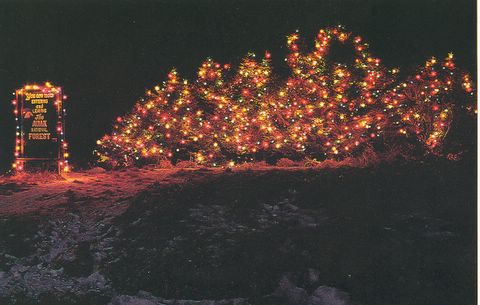
What is the smallest locally proclaimed National Forest in America?
 Adak National Forest, a.k.a. The Christmas Tree Forest.
 Adak National Forest, a.k.a. The Christmas Tree Forest.
 Made up of 33 evergreens, Adak National Forest began as a tree-planting project designed to improve soldier moral during WWII. Local residents placed a sign, which humorously reads Enter and Leaving the Adak National Forest, next to the grove some time in the early 1960s.
While the base was under military command, residents annually decorated the entire “forest” in Christmas tree lights. Today the base is closed, and Adak has become part of the National Parks System.
Today's History Twiddle and Answer
What common natural disaster took an estimated 60,000 lives along the Austrian and Italian front during WWI?


Twittle Side Note:
I originally began researching this Twittle because of an entry on Thinkquest claiming that avalanches were deliberately used as weapons during WWI.
In truth there was little combat or movement in the Alpine front in winter; just surviving nature was enough of a struggle. Deep snow severely limits movement of ski patrols, let alone regiments or batteries. Monelli's personal accounts of mountain warfare states "during the winter months the engagements were few, almost as if only to stretch oneself out a bit, to surprise an outpost or mock an opponent." Perhaps a patrol was caught too close to a front line gun and suffered a fate worse than shellfire, but in 1915 a mountain offensive in winter was logistically impossible. [5] Hence, planned avalanche ambushes seem improbable.
A final reason to discount the idea of deliberately set avalanches is found in the live-and-let-live attitudes of the soldiers of the Great War towards their adversaries, especially on the front line. This factor would seem likely to be greater on the Alpine front. For generations these Austrians and Italians had been meeting frequently on summit and pass, at markets and weddings. Would the men of the Alps knowingly have tried to bury their neighbors alive? There are, however, stories passed down of cease-fires called after avalanches, with both sides assisting in rescue efforts, that seem more revealing of the soldiers true feelings on the matter. [6]"
Source: http://www.worldwar1.com/itafront/avalan.htm
So what's the lesson?
Don't believe everything you read, always search for primary sources, and happy historybusting...

…it was the avalanche alone…that would account for a third of the total combatants killed in the higher, western half of the Alpine front…
Source: http://www.worldwar1.com/itafront/avalan.htm


Twittle Side Note:
I originally began researching this Twittle because of an entry on Thinkquest claiming that avalanches were deliberately used as weapons during WWI.
"The World War 1 Tyrolean Avalanches
1916-1918
Avalanches were used as highly effective weapons during World War 1. This disastrous weapon started when lot's of snow fell in the Alp's during the December of 1916. People could tell that the avalanche risk was high. A big avalanche killed 250 soldiers while tumbling down on the barracks. Some unknown person got the idea that avalanches could make a highly effective weapon. The avalanche war had begun. Avalanches could be started and even directed by just bombing a mountain. History has not yet calculated the exact number of deaths. Deaths have been estimated as high as 40,000 on each fighting side. Humans are responsible for these death causing, disastrous avalanche killer."
Source: http://library.thinkquest.org/03oct/01747/tyrolean_avalanches.htm
However, historian Richard Galli has this to say on the subject:
In truth there was little combat or movement in the Alpine front in winter; just surviving nature was enough of a struggle. Deep snow severely limits movement of ski patrols, let alone regiments or batteries. Monelli's personal accounts of mountain warfare states "during the winter months the engagements were few, almost as if only to stretch oneself out a bit, to surprise an outpost or mock an opponent." Perhaps a patrol was caught too close to a front line gun and suffered a fate worse than shellfire, but in 1915 a mountain offensive in winter was logistically impossible. [5] Hence, planned avalanche ambushes seem improbable.
A final reason to discount the idea of deliberately set avalanches is found in the live-and-let-live attitudes of the soldiers of the Great War towards their adversaries, especially on the front line. This factor would seem likely to be greater on the Alpine front. For generations these Austrians and Italians had been meeting frequently on summit and pass, at markets and weddings. Would the men of the Alps knowingly have tried to bury their neighbors alive? There are, however, stories passed down of cease-fires called after avalanches, with both sides assisting in rescue efforts, that seem more revealing of the soldiers true feelings on the matter. [6]"
Source: http://www.worldwar1.com/itafront/avalan.htm
So what's the lesson?
Don't believe everything you read, always search for primary sources, and happy historybusting...
Tuesday, September 8, 2009
Answer to today's Twiddle
What is the location of the northernmost golf tournament in the world?

Mount Dundas, which overlooks the polar ice cap, three glaciers, and Thule Air Base in Greenland, is the location of the Annual Mount Dundas Open, the world’s northernmost golf tournament.

Participants meet at the bottom of Mount Dundas, toss their golf clubs and other equipment onto helicopters, and then race 800 feet up the loose shale mountainside in order to reach Dundas’s rock filled golf course. The final 75 feet of the race features a rope climb up shear rock.
All participants are allowed extra golf balls to compensate for any that might fly off the mountain.
Here are a couple fun links written by those who have played on the course, as well as a few links about life on Thule Air Base:
http://www.frostbox.dk/foto/serie5_us.asp
http://books.google.com/books?id=03TEnneiS0kC&pg=PA51&lpg=PA51&dq=mount+dundas+golf+to&source=bl&ots=achTNHV-MC&sig=TlBDbuiUSax_Ma1YU639TY55kgE&hl=en&ei=fDSnSu77H5D4sQP-5JnIBQ&sa=X&oi=book_result&ct=result&resnum=10#v=onepage&q=mount%20dundas%20golf%20to&f=false
http://www.thule.af.mil/
http://www.thule.af.mil/library/factsheets/factsheet.asp?id=5022
Where is Thule? http://depts.washington.edu/icylands/projects/thule/maps/thulemap.php
Photo source: http://www.afweather.af.mil/news/story_media.asp?id=123031433
Sunday, September 6, 2009
Today's Riddle: What is the western hemisphere’s oldest constitution?
Okay, let me think. I know that bunch really cool radical thinkers, who eventually became sanctified as America’s founding fathers, signed some document in 1776.
No wait, that was the Declaration of Independence. The United States Constitution wasn’t written let alone ratified until after the Revolutionary War.
I’m guessing that this is a trick question.
It is probably something that I never learned about in school. Something called The Constitution of the Five Nations, or The Iroquois Book of the Great Law, which some historians believe existed as early as 1390 A.D., while others insist was first created between 1450-1500 A.D…” source http://www.fordham.edu/halsall/mod/iroquois.html

Either way, they beat the American Constitution by a few hundred years. And you know something else? Portland State University had put together an amazing website about the influence of the Iroquois Constitution on our own United States Constitution. It turns out that we modern Americans owe the Iroquois Confederacy quite a lot.
Don’t believe me? See for yourself at http://www.iroquoisdemocracy.pdx.edu/
As always, Happy Historybusting...The answer to today's riddle...
How is it that Obama can be America's 44th president, yet only be the 43rd American to have ever become president?
Hint: It has nothing to do with his birth certificate.
Answer: It has something to do with our 22nd president.
Or was it our 24th president?
Let me think for a moment.
Oh yeah, America's 22nd and 24th president were the same guy.
I think his name was Grover something, and he was a popular president at the time.
Here is Grover Cleveland's biography from the White House's Official Website
Another fun fact about President Cleveland: He is the only American president who was elected as a single man and married during his term in the White House.
Have fun and happy histroybusters...
Saturday, September 5, 2009
How do I sign up for Historybuster's Twitter Riddler Program?
Simple enough...
First: You must sign up for your own free Twitter account. It's easy, and Twitter will walk you through it. Here is the link to sign up: http://twitter.com/
Second: Once you have your account, simply click on the option to Find People and run a search for Historybuster
Once you have found the Historybuster username, simply click on the option to follow.
As a follower of our histoybusting twitterings, you will recieve a daily fun factoid or riddle to share with your kids...
Take care and happy hisotrybusting....
First: You must sign up for your own free Twitter account. It's easy, and Twitter will walk you through it. Here is the link to sign up: http://twitter.com/
Second: Once you have your account, simply click on the option to Find People and run a search for Historybuster
Once you have found the Historybuster username, simply click on the option to follow.
As a follower of our histoybusting twitterings, you will recieve a daily fun factoid or riddle to share with your kids...
Take care and happy hisotrybusting....
Answer to today's tweet riddle...
What famous Russian Tsar placed a tax of 100 rubbles on men who refused to shave their beards?  Answer: Peter the Great, who lived from 1682 to 1725.
Peter wanted to modernize his citizens, so he instituted many reforms designed to "Europeanize" them. Here is an excerpt from Jean Rousset de Missy's book, Life of Peter the Great, written about 1730.
The tsar labored at the reform of fashions, or, more properly speaking, of dress. Until that time the Russians had always worn long beards, which they cherished and preserved with much care, allowing them to hang down on their bosoms, without even cutting the moustache. With these long beards they wore the hair very short, except the ecclesiastics, who, to distinguish themselves, wore it very long. The tsar, in order to reform that custom, ordered that gentlemen, merchants, and other subjects, except priests and peasants, should each pay a tax of one hundred rubles a year if they wished to keep their beards; the commoners had to pay one kopek each. Officials were stationed at the gates of the towns to collect that tax, which the Russians regarded as an enormous sin on the part of the tsar and as a thing which tended to the abolition of their religion.
These insinuations, which came from the priests, occasioned the publication of many pamphlets in Moscow, where for that reason alone the tsar was regarded as a tyrant and a pagan; and there were many old Russians who, after having their beards shaved off, saved them preciously, in order to have them placed in their coffins, fearing that they would not be allowed to enter heaven without their beards. As for the young men, they followed the new custom with the more readiness as it made them appear more agreeable to the fair sex.
From the reform in beards we may pass to that of clothes. Their garments, like those of the Orientals, were very long, reaching to the heel. The tsar issued an ordinance abolishing that costume, commanding all the boyars [i.e., the nobles] and all those who had positions at court to dress after the French fashion, and likewise to adorn their clothes with gold or silver according to their means. As for the rest of the people, the following method was employed. A suit of clothes cut according to the new fashion was hung at the gate of the city, with a decree enjoining upon all except peasants to have their clothes made on this model, upon penalty of being forced to kneel and have all that part of their garments which fell below the knee cut off, or pay two grives every time they entered the town with clothes in the old style. Since the guards at the gates executed their duty in curtailing the garments in a sportive spirit, the people were amused and readily abandoned their old dress, especially in Moscow and its environs, and in the towns which the tsar often visited.
The dress of the women was changed, too. English hairdressing was substituted for the caps and bonnets hitherto worn; bodices, stays, and skirts, for the former undergarments. . . The same ordinance also provided that in the future women, as well as men, should be invited to entertainments, such as weddings, banquets, and the like, where both sexes should mingle in the same hall, as in Holland and England. It was likewise added that these entertainments should conclude with concerts and dances, but that only those should be admitted who were dressed in English costumes. His Majesty set the example in all these changes. . .
Source: http://www.fordham.edu/halsall/mod/petergreat.html
Image: http://library.osu.edu/sites/exhibits/petheo/peterthegreat.htm
All for now and Happy Historybusting
 Answer: Peter the Great, who lived from 1682 to 1725.
Peter wanted to modernize his citizens, so he instituted many reforms designed to "Europeanize" them. Here is an excerpt from Jean Rousset de Missy's book, Life of Peter the Great, written about 1730.
The tsar labored at the reform of fashions, or, more properly speaking, of dress. Until that time the Russians had always worn long beards, which they cherished and preserved with much care, allowing them to hang down on their bosoms, without even cutting the moustache. With these long beards they wore the hair very short, except the ecclesiastics, who, to distinguish themselves, wore it very long. The tsar, in order to reform that custom, ordered that gentlemen, merchants, and other subjects, except priests and peasants, should each pay a tax of one hundred rubles a year if they wished to keep their beards; the commoners had to pay one kopek each. Officials were stationed at the gates of the towns to collect that tax, which the Russians regarded as an enormous sin on the part of the tsar and as a thing which tended to the abolition of their religion.
These insinuations, which came from the priests, occasioned the publication of many pamphlets in Moscow, where for that reason alone the tsar was regarded as a tyrant and a pagan; and there were many old Russians who, after having their beards shaved off, saved them preciously, in order to have them placed in their coffins, fearing that they would not be allowed to enter heaven without their beards. As for the young men, they followed the new custom with the more readiness as it made them appear more agreeable to the fair sex.
From the reform in beards we may pass to that of clothes. Their garments, like those of the Orientals, were very long, reaching to the heel. The tsar issued an ordinance abolishing that costume, commanding all the boyars [i.e., the nobles] and all those who had positions at court to dress after the French fashion, and likewise to adorn their clothes with gold or silver according to their means. As for the rest of the people, the following method was employed. A suit of clothes cut according to the new fashion was hung at the gate of the city, with a decree enjoining upon all except peasants to have their clothes made on this model, upon penalty of being forced to kneel and have all that part of their garments which fell below the knee cut off, or pay two grives every time they entered the town with clothes in the old style. Since the guards at the gates executed their duty in curtailing the garments in a sportive spirit, the people were amused and readily abandoned their old dress, especially in Moscow and its environs, and in the towns which the tsar often visited.
The dress of the women was changed, too. English hairdressing was substituted for the caps and bonnets hitherto worn; bodices, stays, and skirts, for the former undergarments. . . The same ordinance also provided that in the future women, as well as men, should be invited to entertainments, such as weddings, banquets, and the like, where both sexes should mingle in the same hall, as in Holland and England. It was likewise added that these entertainments should conclude with concerts and dances, but that only those should be admitted who were dressed in English costumes. His Majesty set the example in all these changes. . .
Source: http://www.fordham.edu/halsall/mod/petergreat.html
Image: http://library.osu.edu/sites/exhibits/petheo/peterthegreat.htm
All for now and Happy Historybusting
Wednesday, September 2, 2009
Answer to today's tweet riddle...
How could a man be born in 1967 but die in 1821?
Answer: He lived from 1967 to 1821 B.C.
Answer: He lived from 1967 to 1821 B.C.
Saturday, August 22, 2009
Four Facts Every Proactive Parent Should Know
A disturbing 2008 survey conducted by Common Core shows that far too many graduating seniors fail when it comes to answering even the most basic history and literary questions. However, the same survey discovered that the higher achievers tended to have four things in common.
One: At least one of their parents had a college degree.
Two: Most had read at least one piece of literature not assigned at school.
Three: Invariably, they took part in local cultural events with their friends and families—visiting museums, concerts, and plays.
Four: Often they were members of an orchestra, band, performance group, or choir.
These happy few tended to achieve grades one to two levels higher than students who lacked these advantages. So what can a proactive parent do to take advantage of this survey? Well, if you are already doing all of the above, congratulate yourself for doing your utmost to provide your kids with the support they need to succeed in a subject where, according to the US Department of Education, “the amount of weekly instructional time…fell by 22 percent between 1988 and 2004.”
Congratulations aside, what about the rest of us? I mean what can parents do if they don’t have college degrees? Well, mentoring becomes all the more important. Parents should actively seek out opportunities for their kids to interact with college graduates in a casual setting. I am sorry if that sounds snobbish, and I do know many self-educated individuals who could beat the average college graduate in Jeopardy. That being said, encouraging your kids to hang out with educated people, whether college educated or self-educated, will foster a love of learning in your kids. Children tend to live up to the expectations of those they admire, so be sure to provide your kids with role models worth admiring. Many organizations exist to foster these relationships, and a proactive parent will find a way to encourage these important childhood friendships. Consider Big Brothers, Big Sisters, or having them volunteer for a community organization that interests them. When I was a kid, I practically lived at our various community theatres, and I learned more about literature while volunteering for those theatres than I ever did in high school.
Next, encourage your kids to read for fun. Make friends with your local librarians and ask them for help finding books that will appeal to your child. Keep lots of book options on hand at home. Make personal reading time more important than chore time, homework time, and even bedtime. In other words, when children are reading, they get to keep reading and nothing is allowed to get between them and their book. I know as a child, I hated bedtime because I was never tired. My mother bought me a bedside light and let me read quietly in bed for as late as I wanted. Consequently, I devoured books by the dozens.
Finally, even if you can’t afford spending time or money on museums and plays, you can still provide access to cultural activities through film and the Internet. For example, if you know that your kids are about to study American History then rent HBO’s John Adams and watch it together. Check out PBS’s wonderful documentary and companion website entitled Liberty! If you know that they are about to read Romeo and Juliet then rent Zeferelli’s brilliant production and watch it together. Many of these films are available at your library. Now, merely sitting your kids down and telling them to watch a documentary will not work. Actively watching these programs and exploring these websites together is the key. Moreover, keeping these activities fun is essential. Eventually, they will learn how to seek out answers on their own, and then they will be truly educated. While you are at it, every so often, you might try taking out a map and ask them if they can help you find Afghanistan. Even better, take out a timeline and ask them if they know when an important historical event happened. Don’t worry if you don’t know. Discovering the answers together can be twice as much fun, and Historybusters will continue to help you find the answers whenever we can.
The bottom line? People do not value what they do not perceive as valuable. If you as a parent do not value literature and history by making some small space for it in your daily life then your kids will follow suite. It doesn’t take much to hook a curious young mind on history and literature. After all, who doesn’t like a good story? And that is what we are talking about here—the world’s greatest stories.
One: At least one of their parents had a college degree.
Two: Most had read at least one piece of literature not assigned at school.
Three: Invariably, they took part in local cultural events with their friends and families—visiting museums, concerts, and plays.
Four: Often they were members of an orchestra, band, performance group, or choir.
These happy few tended to achieve grades one to two levels higher than students who lacked these advantages. So what can a proactive parent do to take advantage of this survey? Well, if you are already doing all of the above, congratulate yourself for doing your utmost to provide your kids with the support they need to succeed in a subject where, according to the US Department of Education, “the amount of weekly instructional time…fell by 22 percent between 1988 and 2004.”
Congratulations aside, what about the rest of us? I mean what can parents do if they don’t have college degrees? Well, mentoring becomes all the more important. Parents should actively seek out opportunities for their kids to interact with college graduates in a casual setting. I am sorry if that sounds snobbish, and I do know many self-educated individuals who could beat the average college graduate in Jeopardy. That being said, encouraging your kids to hang out with educated people, whether college educated or self-educated, will foster a love of learning in your kids. Children tend to live up to the expectations of those they admire, so be sure to provide your kids with role models worth admiring. Many organizations exist to foster these relationships, and a proactive parent will find a way to encourage these important childhood friendships. Consider Big Brothers, Big Sisters, or having them volunteer for a community organization that interests them. When I was a kid, I practically lived at our various community theatres, and I learned more about literature while volunteering for those theatres than I ever did in high school.
Next, encourage your kids to read for fun. Make friends with your local librarians and ask them for help finding books that will appeal to your child. Keep lots of book options on hand at home. Make personal reading time more important than chore time, homework time, and even bedtime. In other words, when children are reading, they get to keep reading and nothing is allowed to get between them and their book. I know as a child, I hated bedtime because I was never tired. My mother bought me a bedside light and let me read quietly in bed for as late as I wanted. Consequently, I devoured books by the dozens.
Finally, even if you can’t afford spending time or money on museums and plays, you can still provide access to cultural activities through film and the Internet. For example, if you know that your kids are about to study American History then rent HBO’s John Adams and watch it together. Check out PBS’s wonderful documentary and companion website entitled Liberty! If you know that they are about to read Romeo and Juliet then rent Zeferelli’s brilliant production and watch it together. Many of these films are available at your library. Now, merely sitting your kids down and telling them to watch a documentary will not work. Actively watching these programs and exploring these websites together is the key. Moreover, keeping these activities fun is essential. Eventually, they will learn how to seek out answers on their own, and then they will be truly educated. While you are at it, every so often, you might try taking out a map and ask them if they can help you find Afghanistan. Even better, take out a timeline and ask them if they know when an important historical event happened. Don’t worry if you don’t know. Discovering the answers together can be twice as much fun, and Historybusters will continue to help you find the answers whenever we can.
The bottom line? People do not value what they do not perceive as valuable. If you as a parent do not value literature and history by making some small space for it in your daily life then your kids will follow suite. It doesn’t take much to hook a curious young mind on history and literature. After all, who doesn’t like a good story? And that is what we are talking about here—the world’s greatest stories.
Tuesday, August 18, 2009
In honor of this day in history...
On August 18, 1920, the 19th Amendment to the United States Constitution, which guarantees the right of women to vote, was ratified when Tennessee became the 36th state to approve it. In Honor of that event, Historybusters would like to recommend the following movie:

Iron Jawed Angels might be just the ticket to get your daughters interest in Women’s History. Featuring an all-star cast, including Hilary Swank, Angelica Huston, Julia Ormond, Brooke Smith, and Frances O’Connor, Iron Jawed Angles tells the story of suffragettes Alice Paul and Lucy Burns and their fight for women’s right to vote. Admittedly a bit heavy handed in places, it does manage to make one feel grateful to the many women who fought for a right that is too often neglected. Family friendly, but with mature content
Want to learn more about the Suffrage Movement? Check out these websites:
Women involved in early reform movements
PBS companion site for Not for Ourselves Alone
PBS introduction for One Woman, One Vote
Timeline of the Women's suffrage movement
Women's suffrage from the Susan B. Anthony Canter
Lesson plan for Suffrage from the Library of Congress
The fight for suffrage from Digital History
Lucy Burns & Alice Paul at the Libray of Congress
Tuesday, August 4, 2009
In Honor of Nagasaki and Hiroshima

On August 6, 1945, the US military dropped an atomic bomb on the city of Hiroshima, over 192,000 people died. Three days later, on August 9, the US dropped a second atomic bomb, this time on Nagasaki, over 74,000 people died. On August 15, Japan's Emperor Hirohito surrendered and WWII was over.
Perhaps the most powerful film commemorating these events is not a film at all but a feature length cartoon entitled Barefoot Gen, created by Japan's award winning manga artist Keiji Nakazawa. Born in Hiroshima in 1939, Nakazawa was one of only two in his family to survive the 1945 bombing. He was seven years old at the time. In Barefoot Gen, he tells his story as only an eyewitness can. This is not a cartoon for children. Barefoot Gen is a powerful and personal statement about the human cost of atomic warfare. It contains strong images and adult themes. We recommend it highly.
For other Historybusters' recommendations for Nagasaki and Hiroshima, click here. Members will also find a wealth of information in their members' center. Simply visit the WWII area of the center and scroll down to The Bomb.
As always, Happy Historybusting...
For other Historybusters' recommendations for Nagasaki and Hiroshima, click here. Members will also find a wealth of information in their members' center. Simply visit the WWII area of the center and scroll down to The Bomb.
As always, Happy Historybusting...
Saturday, April 11, 2009
Why history teachers hate Wikipedia and what you can do about it.
Do all history teachers hate Wikipedia? In truth, hate is probably too strong a word. After all, Wikipedia has many useful features, and even I, a card carrying Wikipedia hating history teacher, have used it upon occasion. But if we don’t all hate it, then why do so many of us stipulate that our students do not use Wikipedia as a research source?
Problem One: Wikipedia has no official editor or fact checker, so the site is known to contains mistakes and content biases. I run across mistakes all the time. Once, while I was preparing a curriculum for the film Spirit Bear: The Simon Jackson Story, Wikipedia linked me to a biography about a different Simon Jackson. If I hadn’t been checking all my sources, I would have made a seriously foolish mistake. As for biases, the site even has a page where readers may question any article’s neutrality, along with a backlog of articles yet to be processed and a request for volunteer help. As a researcher, I’ve learned how to find facts within biases, but how many high school students take the time to read the discussion behind the discussion?
Problem Two: The site does not really feature primary source material. If you look up Spirit Bear in Wikipedia, you will find this entry. If you Google past Wikipedia, you will suddenly you find this site, which contains Simon Jackson’s story told in his own words. Look up Apollo 13 on Wikipedia and you will find this entry. Search a little further on the web, and you will stumble on this official e-book about the Apollo missions posted by NASA Headquarters. It includes a first hand five-page account of what happened aboard Apollo 13 written by one of the three men who lived it, James A. Lovell. Take a look at the difference between the Wikipedia entry and the five-page account written by Lovell, and you tell me which is the more interesting and accurate account. You tell me why a history teacher might actually want a student to search past Wikipedia.
Problem Three: The writing on Wikipedia is largely atrocious, causing many an editor to cringe in terror. It is full of passive construction, vague subjects, and run on sentences. People add information by adding facts to existing ideas; so most sentences end up constructed something like this:
Apollo 13 was intended to be the third manned lunar-landing mission, part of Project Apollo under NASA in the United States, that would look more closely into the surface of the moon.
A good editor might take the time to write this:
“NASA intended Apollo 13 to be Project Apollo’s third manned lunar-landing and designed its systems to examine the lunar surface up close.”
I know this edit may seem silly to many people, but how will kids ever learn to write clear and effective sentences if they are constantly exposed to unclear and wordy writing?
Problem Four: Wikipedia is too easy. In our instant access online world, information is one click away. When kids use search engines to do historical research, nine times out of ten Wikipedia is the first link offered to them. Moreover, I don’t blame them for clicking on the Wikipedia link because they have come to depend on it. They know that most of the other links presented to them lead to an endless number of commercial sites offering links to another endless number of commercial sites.
So what is a student of history to do?
Google has a free online search feature for its AdSense members that has solved the problem for my students. I was able to formate a specialized search engine that weeds out all sites based upon my preferences. I designed my new search engine so it will only access educational, miliatry, governmental, and a few hand picked organizational sites. In other words, the search engine only looks for URLs with edu, mil, int., and gov, designations. When I tried my new search engine, I was thrilled with the outcome. I immediately found dozens of excellent sites that that would have been buried by other search engines. In fact, I found the wonderful online e-book by NASA on my specialized search engine within the first page of listings. My students and I have said goodbye to the overly commercialized misinformation super highway and finally said hello to a search engine that quickly meets both our scholastic needs.
The Google AdSense account is free. You just need to have a blog or website where you can insert the HTML codes to access your new search engine.
If you are a member of Historybusters, you can access the search engine I’ve just described through your members center. Give it a try the next time your kids have to do online research, and discover how much more fun the informational super highway is without all the commercial traffic.
Problem One: Wikipedia has no official editor or fact checker, so the site is known to contains mistakes and content biases. I run across mistakes all the time. Once, while I was preparing a curriculum for the film Spirit Bear: The Simon Jackson Story, Wikipedia linked me to a biography about a different Simon Jackson. If I hadn’t been checking all my sources, I would have made a seriously foolish mistake. As for biases, the site even has a page where readers may question any article’s neutrality, along with a backlog of articles yet to be processed and a request for volunteer help. As a researcher, I’ve learned how to find facts within biases, but how many high school students take the time to read the discussion behind the discussion?
Problem Two: The site does not really feature primary source material. If you look up Spirit Bear in Wikipedia, you will find this entry. If you Google past Wikipedia, you will suddenly you find this site, which contains Simon Jackson’s story told in his own words. Look up Apollo 13 on Wikipedia and you will find this entry. Search a little further on the web, and you will stumble on this official e-book about the Apollo missions posted by NASA Headquarters. It includes a first hand five-page account of what happened aboard Apollo 13 written by one of the three men who lived it, James A. Lovell. Take a look at the difference between the Wikipedia entry and the five-page account written by Lovell, and you tell me which is the more interesting and accurate account. You tell me why a history teacher might actually want a student to search past Wikipedia.
Problem Three: The writing on Wikipedia is largely atrocious, causing many an editor to cringe in terror. It is full of passive construction, vague subjects, and run on sentences. People add information by adding facts to existing ideas; so most sentences end up constructed something like this:
Apollo 13 was intended to be the third manned lunar-landing mission, part of Project Apollo under NASA in the United States, that would look more closely into the surface of the moon.
A good editor might take the time to write this:
“NASA intended Apollo 13 to be Project Apollo’s third manned lunar-landing and designed its systems to examine the lunar surface up close.”
I know this edit may seem silly to many people, but how will kids ever learn to write clear and effective sentences if they are constantly exposed to unclear and wordy writing?
Problem Four: Wikipedia is too easy. In our instant access online world, information is one click away. When kids use search engines to do historical research, nine times out of ten Wikipedia is the first link offered to them. Moreover, I don’t blame them for clicking on the Wikipedia link because they have come to depend on it. They know that most of the other links presented to them lead to an endless number of commercial sites offering links to another endless number of commercial sites.
So what is a student of history to do?
Google has a free online search feature for its AdSense members that has solved the problem for my students. I was able to formate a specialized search engine that weeds out all sites based upon my preferences. I designed my new search engine so it will only access educational, miliatry, governmental, and a few hand picked organizational sites. In other words, the search engine only looks for URLs with edu, mil, int., and gov, designations. When I tried my new search engine, I was thrilled with the outcome. I immediately found dozens of excellent sites that that would have been buried by other search engines. In fact, I found the wonderful online e-book by NASA on my specialized search engine within the first page of listings. My students and I have said goodbye to the overly commercialized misinformation super highway and finally said hello to a search engine that quickly meets both our scholastic needs.
The Google AdSense account is free. You just need to have a blog or website where you can insert the HTML codes to access your new search engine.
If you are a member of Historybusters, you can access the search engine I’ve just described through your members center. Give it a try the next time your kids have to do online research, and discover how much more fun the informational super highway is without all the commercial traffic.
Wednesday, March 4, 2009
Saint Patrick's Day is almost here...
Did you know that Saint Patrick was not Irish, and he never drove a single snake from Ireland? In fact, Ireland never had any snakes; however, Ireland did have a strong pagan tradition that considered the snake sacred. The Irish legend about St. Patrick driving the snakes from Ireland really refers to his driving the old pagan religion out of Ireland. Keep that in mind this Saint Patrick’s Day.
In honor of Saint Patrick’s Day, Historybusters has a few movie recommendations.

Patrick is a fine documentary that doesn’t recount the simple folk myths about Saint Patrick. Instead, this documentary, narrated by Liam Neeson and Gabriel Byrne, offers a dramatic new look at one of the best-loved and least-understood icons of world religion. The story of the real St. Patrick is part adventure tale and part spiritual awakening with the future saint rising from slave to liberator; learning to forgive and ultimately love his enemies; taking up a cause no one believed in; and finally lighting a fire that kept western civilization alive. This film is very family friendly.
St. Patrick: Apostle of Ireland is another fine documentary about the life of the real Saint Patrick. Only two documents written by Patrick, the Confession and his Letter to Coroticus, an Irish warlord, remain to tell us about this important man. Yet these brief writings captured his emotional state, his innermost feelings, and his aspirations. Read in voice-over and mixed with evocative music and gorgeous photography, Patrick’s words carry the viewer back in time to re-live the experience of walking side by side with him. From his birth to his death, viewers are able to witness Patrick’s physical struggles and to participate fully in his transformation and spiritual mission. For those interested in the topic, it is an entrancing piece of work and very family friendly.
Fun Fact about Saint Patty’s Day: In Ireland, those of the Protestant faith do not wear green to honor the day. They wear Orange in honor of William of Orange and their Protestant faith.
To help you understand a bit more about the fight between the Protestant Orange and the Catholic Green here are five more films that we would like to recommend in honor of the day:
Michael Collins
Irish writer-director Neil Jordan tackles the controversial biography of IRA member Michael Collins, one of Ireland’s most important 20th century political leaders, in a lavish film that won critical acclaim on both continents. The film follows Collins as he matures from guerrilla fighter to national statesman, creating a vivid portrait of 1920’s Ireland and its politics. Michael Collins is a wonderfully accurate and superbly crafted film, featuring performances by Liam Neeson, Julia Roberts, Allen Rickman, Aidan Quinn, and Stephan Rae. It does contain mature content.
In the Name of the Father is a 1993 film directed by Jim Sheridan based on the true life story of the Guildford Four, four people falsely convicted of the IRA's Guildford pub bombing which killed 4 off-duty British soldiers and a civilian. The screenplay was adapted by Terry George and Jim Sheridan from the autobiography Proved Innocent by Gerry Conlon. It is a powerful film that contains mature content.
The Wind That Shakes the Barley
Set during the early days of the Irish Republican Army, The Wind That Shakes the Barley provides a mesmerizing look at the profound emotional transitions a fictional young doctor goes through on his road to becoming a saboteur and killer. Providing excellent background into the birth and existence of the IRA, this outstanding film contains mature content.
January 30, 1972, is known as Bloody Sunday in Ireland. Named for the protest that took a violent turn in Londonderry, Northern Ireland. British paratroopers, trying to restore order after a particularly unruly period of unrest, opened fire on a peaceful demonstration; fourteen Irish Catholic civil-rights protesters died. Based Don Mullan's politically influential book Eyewitness Bloody Sunday, this is the definite film about a tragedy most American’s only know about from U2's song "Sunday Bloody Sunday." Filmed in such a way as to make the audience feels that they are there, this truly fine film contains mature content.
In honor of Saint Patrick’s Day, Historybusters has a few movie recommendations.
Patrick is a fine documentary that doesn’t recount the simple folk myths about Saint Patrick. Instead, this documentary, narrated by Liam Neeson and Gabriel Byrne, offers a dramatic new look at one of the best-loved and least-understood icons of world religion. The story of the real St. Patrick is part adventure tale and part spiritual awakening with the future saint rising from slave to liberator; learning to forgive and ultimately love his enemies; taking up a cause no one believed in; and finally lighting a fire that kept western civilization alive. This film is very family friendly.
St. Patrick: Apostle of Ireland is another fine documentary about the life of the real Saint Patrick. Only two documents written by Patrick, the Confession and his Letter to Coroticus, an Irish warlord, remain to tell us about this important man. Yet these brief writings captured his emotional state, his innermost feelings, and his aspirations. Read in voice-over and mixed with evocative music and gorgeous photography, Patrick’s words carry the viewer back in time to re-live the experience of walking side by side with him. From his birth to his death, viewers are able to witness Patrick’s physical struggles and to participate fully in his transformation and spiritual mission. For those interested in the topic, it is an entrancing piece of work and very family friendly.
Fun Fact about Saint Patty’s Day: In Ireland, those of the Protestant faith do not wear green to honor the day. They wear Orange in honor of William of Orange and their Protestant faith.
To help you understand a bit more about the fight between the Protestant Orange and the Catholic Green here are five more films that we would like to recommend in honor of the day:
Michael Collins
Irish writer-director Neil Jordan tackles the controversial biography of IRA member Michael Collins, one of Ireland’s most important 20th century political leaders, in a lavish film that won critical acclaim on both continents. The film follows Collins as he matures from guerrilla fighter to national statesman, creating a vivid portrait of 1920’s Ireland and its politics. Michael Collins is a wonderfully accurate and superbly crafted film, featuring performances by Liam Neeson, Julia Roberts, Allen Rickman, Aidan Quinn, and Stephan Rae. It does contain mature content.
In the Name of the Father is a 1993 film directed by Jim Sheridan based on the true life story of the Guildford Four, four people falsely convicted of the IRA's Guildford pub bombing which killed 4 off-duty British soldiers and a civilian. The screenplay was adapted by Terry George and Jim Sheridan from the autobiography Proved Innocent by Gerry Conlon. It is a powerful film that contains mature content.
The Wind That Shakes the Barley
Set during the early days of the Irish Republican Army, The Wind That Shakes the Barley provides a mesmerizing look at the profound emotional transitions a fictional young doctor goes through on his road to becoming a saboteur and killer. Providing excellent background into the birth and existence of the IRA, this outstanding film contains mature content.
January 30, 1972, is known as Bloody Sunday in Ireland. Named for the protest that took a violent turn in Londonderry, Northern Ireland. British paratroopers, trying to restore order after a particularly unruly period of unrest, opened fire on a peaceful demonstration; fourteen Irish Catholic civil-rights protesters died. Based Don Mullan's politically influential book Eyewitness Bloody Sunday, this is the definite film about a tragedy most American’s only know about from U2's song "Sunday Bloody Sunday." Filmed in such a way as to make the audience feels that they are there, this truly fine film contains mature content.
The Secret of Roan Inish is technically not history. In fact, it is pure kid friendly fantasy. However, it provides such a delightful look at Irish folklore and life in post World War II Ireland that Historybusters can't help but recommend watching it this month.
And finally, if you are a fan of David Lean films, you should check out Ryan’s Daughter. Set in 1916 Ireland, this gorgeous film tells the story of an Irish girl who has an affair with a British officer during World War I, despite opposition from her nationalist neighbors. The film is a very loose adaptation of Gustave Flaubert's novel Madame Bovary. It does contain mature content.
And finally, if you are a fan of David Lean films, you should check out Ryan’s Daughter. Set in 1916 Ireland, this gorgeous film tells the story of an Irish girl who has an affair with a British officer during World War I, despite opposition from her nationalist neighbors. The film is a very loose adaptation of Gustave Flaubert's novel Madame Bovary. It does contain mature content.
Hope you find time to sample some Irish history this month. Until next time, thanks and Happy Historybusting...
Subscribe to:
Posts (Atom)


 Posts
Posts

