Some other nice links:
Tuesday, February 23, 2010
On this day in history....
Some other nice links:
A wonderful Historybusting movie...

Children of Huang Shi is a 2008 film based on the life of George Hogg, an independent journalist for the Associated Press during the Second Sino-Japanese War. I should warn you right now, the film is rate R. But then again, what movie that takes its viewers into the heart of Civil War China on the eve of World War II could not be rated R. The film's few scenes of the Japanese occupation and the Nanking Massacre were brutal and all too accurate. However, this film is about much more than Nanking. It is about a man who takes it upon himself to save over sixty orphaned boys from the terrors of that time by attempting a 700-mile march along the Silk Road.
As with all films, it is an abridged and altered version of his true story. The film has been criticized for ignoring the role of Rewi Alley, a Communist New Zealander celebrated in China's revolution. The film also turned real life New Zealander Kathleen Hall, who was associated with Alley, into an American without a past. Their romance adds to the story but is inaccurate. Several other inaccuracies occur within the film. Perhaps the most blatant inaccuracy occurs near the end of the film. At the risk of giving a bit too much away, let’s just say that the cut he received in the movie while fixing the truck didn’t happen. In truth, aftering bringing his boys to safety, Hogg stubbed his toe while playing basketball with them in July 1945. However, the events following that small injury were accurate. Overall, this film is destined to become one of our Historybusing favorites, and lucky, George Hogg left a first hand account of his life—an autobiography entitled I See a New China.
Click here for the film’s official website
Monday, February 22, 2010
Need to cite your sources???
The dreaded day comes to all serious students when they are asked to write a research paper complete with citations and bibliography. Here are some excellent links that should help your students through their dread...
Rules for citing sources:
The rules of citation vary depending upon your purpose, teachers, and discipline. The one rule that never changes is “Always Cite Your Sources.” Citing your sources adds validity to your reports and ensures that you do not plagiarize. Here are two excellent websites about how to cite your sources:
http://www.rpi.edu/web/writingcenter/wc_web/school/citations.htm
http://www.lib.berkeley.edu/instruct/guides/citations.html
Your teacher will most likely ask you to use MLA (Modern Language Association) for your citations; it is used in college level literature and the humanities papers. Here are some great websites to help you format both your footnotes and your bibliography.
- MLA Style Guide (pdf) - Examples of how to cite sources for reference lists. From American University.
- Bibme - Creates bibliographies, and one can then download the bibliography as an RTF file. Registration is free.
- Documenting Sources: MLA Style - MLA in-text citations, list of works cited, information notes, manuscript format, and a sample paper. From http://www.dianahacker.com/
- EasyBib - Fill in online form and site will generate standard bibliographic citations. Only MLA Style is free.
- Frequently Asked Questions about the MLA Style - Official MLA site.
- MLA Parenthetical Documentation - From St. Cloud State University.
- Son of Citation Machine - Fill in online form and site will generate standard bibliographic and in-text citations.
- MLA Citation Examples – Posted by Honolulu Community College Library
- MLA Citation Examples – Posted by Long Island University
- MLA Citation Guide from Ohio State University
- I particularly like what they have to say about citing electronic sources (i.e. the Internet)
Friday, January 29, 2010
A historybusters' tirade...
Kamehameha V and Wikipedia:
A failure to fact check or proof read
I have tutored many history students whose teachers have told them “not to cite Wikipedia as a source,” yet they seem shocked when I explain to them why.
Recently, I spent quite a lot of time on Wikipedia, doing research for a set of Historybusters’ educational card decks. I needed the public domain images available on their site, but once again I was distressed by the quality of the site’s content. For those readers who are unfamiliar with Wikipedia, it is a volunteer, community-edited, free, on-line Encyclopedia. Any member of the Internet community may sign up to write articles, expand articles, or edit mistakes. Writers are expected to cite sources to primary documents in order to support any facts they include in their articles. A community of volunteer editors works to police new articles and ensure that additions meet Wikipedia’s expectations. This experiment in community editing has proven quite popular, and the site is usually the first link offered up on search engines like Google whenever students type in research word strings. Sadly, the site doesn’t always catch its mistakes or cite its contributor’s additions, which is why most educators tell their students not to use it.
Case in point:
According to the Wikipedia entry for Hawai’i’s King Kamehameha V, he “fell deeply in love with his cousin, Abigail Maheha at the Royal School. He was only 5 years old when he was caught sleeping with Abigail She became pregnant with his child when he was 15 and she 13. On February 4, 1846 when she was 6 months pregnant, she was removed from the Royal School, separated from Lot Kapuaiwa and forced to marry Keaupuni a commoner from Koloa Kauai, the gardener of her adopted mother Miriam Kekauonohi. These events could have led the young Prince to his renounce marriage for the rest of his life, including that to his adopted sister Bernice Pauahi Paki. She eventually married Charles R. Bishop.”
Now, I won’t even mention the poor writing quality with its passive construction and missing puntuation marks. Ooops, I guess that I just mentioned them. Ahh well. What I really wanted to point out is the lack of primary source references within this article. When I broke out my family copy of The Hawaiian Chiefs’ Children’s School by Mary A. Richards, which contains first hand accounts of her Grandparents’ experiences as the school’s teachers, I discovered that Miss Abigail Maheha was indeed “excused from the school activities,” on January 18, 1847, and on February 4, 1847, she was married to the commoner Keaupuni—“a scholar of the High School, but without any diploma.” I guess that I can forgive an online encyclpedia for getting the year off by one, after all, what is one year in the life of a nation. However, The Hawaiian Chiefs’ Children’s School makes no mention of Lot Kamehameha’s involvement in the event. It does however mention Lot’s brother Moses Kekuaiwa, who was expelled from the school over that same period because of ceratin “escapades, but lightly touched upon in his written confession.” It seems that Lot’s older brother was the lad who had the affair with little Abigail. So what is the big deal? Well, consider the rest of this particular Wikipedia entry:
“Rumors has it that (Lot) ask's Bernice to take the Throne. As Lot laid bedstricken, he answered those that came to visit him while preparations for his birthday celebration was underway: "The Good Lord cannot take me today, today is my birthday". He was steadfest, (onipa'a) he believed till the end that he would recover, meaning he never proposed the Throne to Bernice! What is true is that a rumor of such could be of great help in conniving everyone to believe that Bernice should inherit thru Princess Ruth the Bulk of the Kamehameha Lands. Today, the 300 plus descendents of Lot Kapuaiwa Kamehameha and Abigail Maheha thru their only daughter Keanolani, are the only Direct Lineal Descendents of the Kamehameha Dynasty, for Lot was the last of the Kamehameha's to sit upon the Throne, therefore making his Branch the Lineal Branch. All other branches are either collateral or issued of a branch that was not the last of the Kamehameha's to rule . About 150 of then still live on the island of Kauai with about 100 of them in or around the Town of Hanapepe.”
If you can get past the use of an exclaimation point in an encyclopedia entry without throwing your hands up in disgust, you can see that this entry wishes to claim that “the only Direct Lineal Descendents of the Kamehameha Dynasty” belongs to a family on Kaua’i and that the “Bulk of the Kamehameha Lands” should not have gone to Bernice Pauahi Bishop as they did. Now, I am not going to write a history paper explaining why such a claim seems totally unfounded to me. I will simply enourage you to research the lives of King Lot Kamehameh V and Bernice Pauahi Bishop on your own, without relying on Wikipedia or any seconday source. You might just discover the deep repect and affection they held for each other. You might also discover that Lot never “renounced marriage for the rest of his life,” he simply gave his blessing to Bernice’s choice of husband, releasing her from their expected royal betrothal with the words, “She is to good for me.”
Now don’t get me wrong. Wikipedia has its uses. I use it to find public domain images and remind myself of names or dates that I might have forgotten. I also have found some wonderful primary source websites by visiting the external links providied at the bottom of each Wikipedia entry. However, just as often, I have found patently commercial links that are full of specularion, gossip, opinion, and regurgitated wives’ tales. So if you do allow youself, or your young scholars, to use Wikipedia, teach them to be skeptical and always double check all Internet facts with multiple primary source materials.
A few people that I have shared this story with have suggested that I become an editor for Wikipeadia. I remind them that Wikipedia recruites a volunteer army. Editing and fact checking for Wikipeadia is a full time occupation, and I have my own wars to fight. Indeed, the volunteer army that Wikipeadia has asembled has done an amazing job. I simply suggest that we as participents need to be familiar with their fight, so we will not be misinformed by any of their overlooked battles.
I also suggest that when you do research, you try out the educational websearch available on our members' site. Here is the link:
http://www.navigatinglife.org/historybustersmemberscenter/id106.html
As always happy historybusting...
New Historybusting card decks for your kids

Please give them a try and let me know what your kids think. I know that with my own group of first through third graders, they loved playing war with the deck and the players all understood how BC and AD dates worked within one afternoon, and I barely had to explain a thing.
So without further ado, here come the cards:
Card Decks
Classical Conquest Deck
HTML, Word
Medieval Conquest Deck
HTML, Word
Renaissance Mind Deck
HTML, Word
Reformation Conquest Deck
HTML, Word
Hawaiian Conquest Deck
HTML, Word
Wednesday, September 9, 2009
Today's Twiddle and Answer...
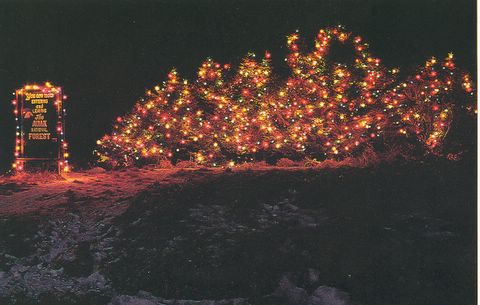
Adak National Forest, a.k.a. The Christmas Tree Forest. Made up of 33 evergreens, Adak National Forest began as a tree-planting project designed to improve soldier moral during WWII. Local residents placed a sign, which humorously reads Enter and Leaving the Adak National Forest, next to the grove some time in the early 1960s.
While the base was under military command, residents annually decorated the entire “forest” in Christmas tree lights. Today the base is closed, and Adak has become part of the National Parks System.
Today's History Twiddle and Answer
…it was the avalanche alone…that would account for a third of the total combatants killed in the higher, western half of the Alpine front…
Source: http://www.worldwar1.com/itafront/avalan.htm


Twittle Side Note:
I originally began researching this Twittle because of an entry on Thinkquest claiming that avalanches were deliberately used as weapons during WWI.
"The World War 1 Tyrolean Avalanches
1916-1918
Avalanches were used as highly effective weapons during World War 1. This disastrous weapon started when lot's of snow fell in the Alp's during the December of 1916. People could tell that the avalanche risk was high. A big avalanche killed 250 soldiers while tumbling down on the barracks. Some unknown person got the idea that avalanches could make a highly effective weapon. The avalanche war had begun. Avalanches could be started and even directed by just bombing a mountain. History has not yet calculated the exact number of deaths. Deaths have been estimated as high as 40,000 on each fighting side. Humans are responsible for these death causing, disastrous avalanche killer."
Source: http://library.thinkquest.org/03oct/01747/tyrolean_avalanches.htm
However, historian Richard Galli has this to say on the subject:
In truth there was little combat or movement in the Alpine front in winter; just surviving nature was enough of a struggle. Deep snow severely limits movement of ski patrols, let alone regiments or batteries. Monelli's personal accounts of mountain warfare states "during the winter months the engagements were few, almost as if only to stretch oneself out a bit, to surprise an outpost or mock an opponent." Perhaps a patrol was caught too close to a front line gun and suffered a fate worse than shellfire, but in 1915 a mountain offensive in winter was logistically impossible. [5] Hence, planned avalanche ambushes seem improbable.
A final reason to discount the idea of deliberately set avalanches is found in the live-and-let-live attitudes of the soldiers of the Great War towards their adversaries, especially on the front line. This factor would seem likely to be greater on the Alpine front. For generations these Austrians and Italians had been meeting frequently on summit and pass, at markets and weddings. Would the men of the Alps knowingly have tried to bury their neighbors alive? There are, however, stories passed down of cease-fires called after avalanches, with both sides assisting in rescue efforts, that seem more revealing of the soldiers true feelings on the matter. [6]"
Source: http://www.worldwar1.com/itafront/avalan.htm
So what's the lesson?
Don't believe everything you read, always search for primary sources, and happy historybusting...